Repairing old LEGO sets: replace, restore, and revive
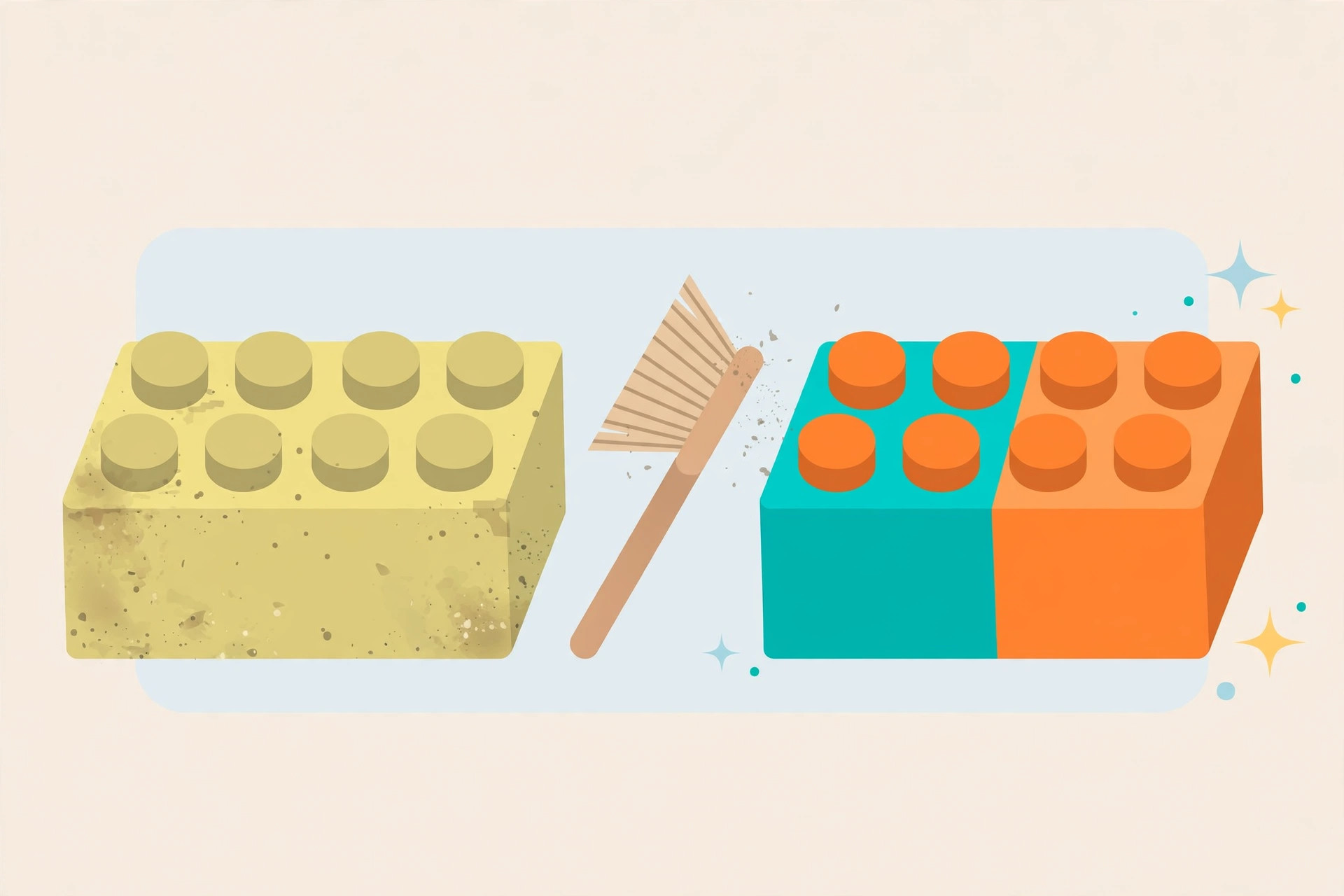
A childhood set pulled from a parent's attic is usually three problems at once: missing pieces, yellowed bricks, and a few cracked or tired parts. Restore them in the right order, free official replacements first, then safe DIY fixes with their real risks, and you won't wreck what you meant to save.
The repair order of operations
- Inventory what you have. Rebuild (or partially rebuild) and list what's missing or damaged.
- Request free replacements for broken parts from LEGO, even for old sets.
- Buy what's left on the secondhand market.
- Clean and whiten the bricks you kept.
- Repair or replace cracked parts and minifigs last, these are judgment calls.
Free first: LEGO's replacement-parts service
Before spending anything, try the official route: LEGO's customer service replaces broken parts for free, and it works even for old or hand-me-down sets. Go to LEGO's site, use the Support column's missing/broken parts option, and enter the set number (find it on the box or the building instructions), the brick type, and your delivery details. Two catches: you need a separate request for each set, and if LEGO has discontinued the part, no replacement exists, then it's the secondhand market or DIY. Either way, you'll get a reply, so the request costs nothing but a few minutes.
Yellowed bricks: the whitening fix and its risks
White and light bricks yellow with age and light exposure, and the fan-community fix is a hydrogen-peroxide soak, often called retr0bright. The widely used procedure:
- Put the pieces in a plastic or glass tub and lightly dust them with Oxy-clean.
- Submerge them in 3% hydrogen peroxide.
- Place the tub in sunlight (optional but faster).
- Once a day, add more peroxide and stir if needed.
- Rinse on the fifth day, or when the pieces look white enough.
A one-to-two-week soak can transform old yellowed white parts. But know the risks before you start: gray parts can go blotchy or too light, test on expendable pieces first. Never use spray cleaners on bricks; collectors report they dried and cracked pieces. And treat chrome and metalized parts gently: a quick soak and light scrub only.
Cracked parts and tired minifigs: repair vs. replace
For cracked structural parts, replacement almost always beats repair, glue joints on ABS are weak, and a stressed clip will fail again. (LEGO's own displays use a specially formulated plastic weld, not household glue.) Source the replacement through the official service above or a secondhand seller, and retire the cracked part.
Minifigure torso cracks are the one exception people try to fix: some restorers use a tiny amount of acetone to fuse the crack, since it melts ABS. It can work, and it can also permanently ruin the figure, as the tutorials themselves warn. Treat it as an adults-only, expendable-figure experiment: good ventilation, tiny amounts, and never on a figure you'd mourn. For any valuable minifig, replacement is the sane choice.
When a part is done
Some parts don't come back: heavily chewed bricks, stress-cracked hinges, badly blotched pieces, and stickers that have lifted. Retire them to the "parts bin for interior structure", a chewed 2×4 still holds up a hidden layer just fine, and spend your replacement budget on the visible pieces. Professional restorers follow the same triage: deep-clean everything, check for missing pieces, order replacements, and only then decide what the remaining damage is worth fixing.
What success looks like
A restored set: inventoried, official replacements requested, gaps filled secondhand, bricks cleaned and whitened with the risky colors tested first, and cracked parts replaced rather than glued. The set should look complete on the shelf and be sturdy enough to handle, if a repair feels fragile, it is; replace the part instead.
FAQ
Does the free replacement service work for very old sets? Often yes, the service isn't limited to current sets. The limit is part availability: discontinued parts can't be replaced.
What does LEGO's service need from me? The set name or number (from the box or building instructions), the brick type, and your delivery details, one request per set.